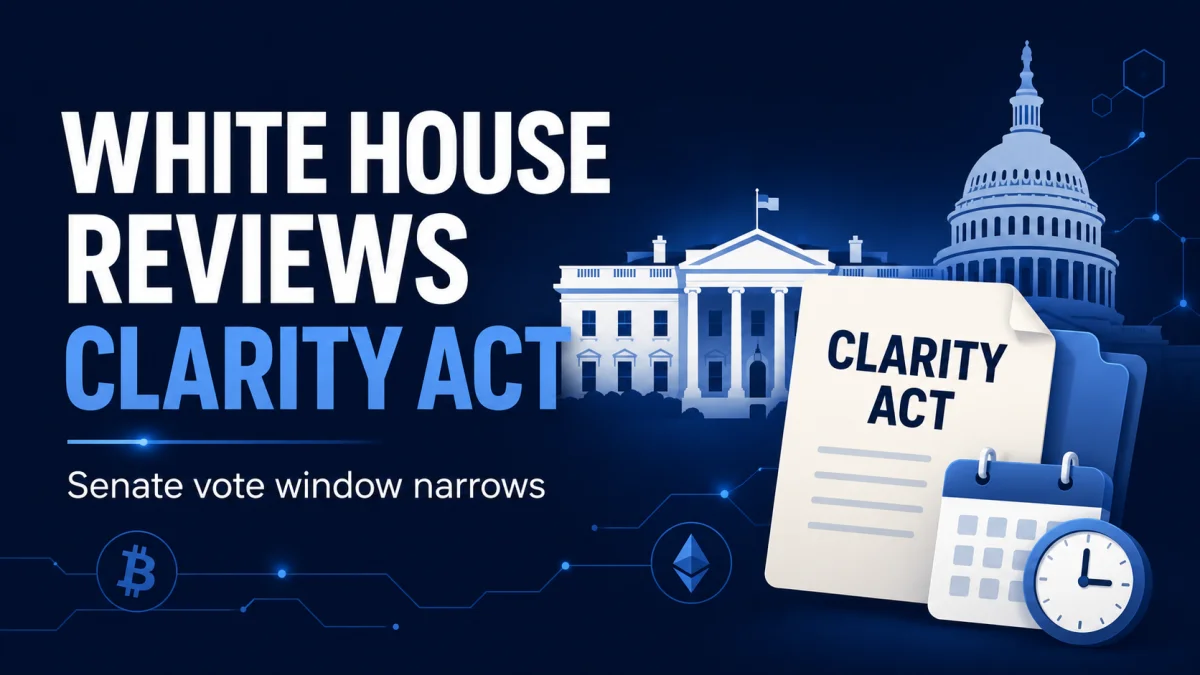
The White House is reviewing the latest bipartisan language attached to the long-awaited Crypto Clarity Act as lawmakers race to secure a Senate vote before the August recess.
The legislation, which aims to establish a clearer regulatory framework for the United States digital-asset market, is facing a tight deadline. Senators are still negotiating several unresolved issues, including ethics provisions connected to government officials and cryptocurrency activities.
Senator Thom Tillis said bipartisan language prepared by Senate negotiators was sent to the White House last week and is now being reviewed.
For more discussions and updated from other users use this thread General Crypto Discussions
According to comments first reported by Punchbowl News senior reporter Brendan Pedersen, White House officials are examining specific sections of the proposal while Senate negotiators continue working toward an agreement.
“We’ve got people working with the White House right now,” Tillis said, adding that officials were reviewing individual lines of the text.
Senate Leaders Hold Back on Procedural Vote
The chances of passing the bill before the recess became more uncertain on Wednesday after Senate Majority Leader John Thune decided not to file cloture on the legislation.
A cloture motion is required to begin the process of limiting debate and moving a bill toward a final Senate vote. Without that procedural step, negotiators have only a limited amount of time to reach a broader agreement.
Thune had earlier expressed hope that the Senate could vote on the crypto market structure bill before lawmakers leave Washington. Republican and Democratic staff members also reportedly held several meetings during the previous 24 hours in an effort to resolve the remaining disagreements.
However, the Senate is also considering several other legislative priorities before beginning its planned five-week break. The chamber could leave Washington as early as Thursday or Friday, placing additional pressure on supporters of the Clarity Act.
Vote May Depend on Senate Schedule
Tillis, who has been working with Democrats on the ethics language, said the bill’s immediate future may depend on whether senators remain in Washington beyond their scheduled departure.
He suggested that a vote would be extremely difficult if the Senate leaves on time.
“If we were getting out on schedule, which would be tomorrow afternoon, I think it’d be a moonshot at this point,” Tillis said.
However, he added that the legislation could still have a chance if the Senate session is extended into the weekend or next week.
The delay does not necessarily mean negotiations have collapsed. Instead, it shows that lawmakers have not yet secured enough support to confidently move the bill through the Senate.
Political Pressure Builds Around Crypto Regulation
The Clarity Act has received support from several major cryptocurrency companies and traditional financial institutions. Coinbase and other industry participants have argued that the United States needs clear rules defining how digital assets, trading platforms and market participants should be regulated.
Supporters believe the legislation could reduce regulatory uncertainty and help prevent crypto businesses from moving their operations outside the United States.
Some Republican lawmakers have accused Democrats of intentionally slowing the bill. Senator Cynthia Lummis, one of the Senate’s most prominent supporters of digital-asset legislation, has argued that delays are preventing Congress from delivering regulatory clarity to the industry.
Support for the bill is also growing outside the immediate Senate negotiations.
A South Carolina Republican lawmaker recently called for the legislation to move forward, describing it as an important part of President Donald Trump’s effort to keep digital-asset innovation and investment in the United States.
The lawmaker said the final legislation should protect consumers, provide law-enforcement agencies with stronger tools and give crypto companies clear rules for operating in the country.
Supporters have also expressed confidence in the work being led by Senate Banking Committee Chairman Tim Scott and Senator Lummis.
Ethics Provisions Remain a Key Issue
Ethics language has emerged as one of the most sensitive parts of the negotiations.
Democratic lawmakers have pushed for stronger restrictions involving senior government officials, elected leaders and their financial interests in cryptocurrency businesses or digital assets.
The White House’s involvement in reviewing the bipartisan proposal could help negotiators resolve those concerns. However, any changes requested by the administration may require additional negotiations before the bill can move forward.
Lawmakers must also determine whether the final ethics provisions can attract enough support from both parties to overcome procedural barriers in the Senate.
Clarity Act Faces Final Pre-Recess Deadline
There is still a narrow path for the bill to receive a vote before the Senate recess.
Should Senate leadership file cloture on Thursday, a floor vote could potentially take place during the weekend. A longer Senate session extending into next week may provide negotiators with their best remaining opportunity to pass the bill before lawmakers leave Washington.
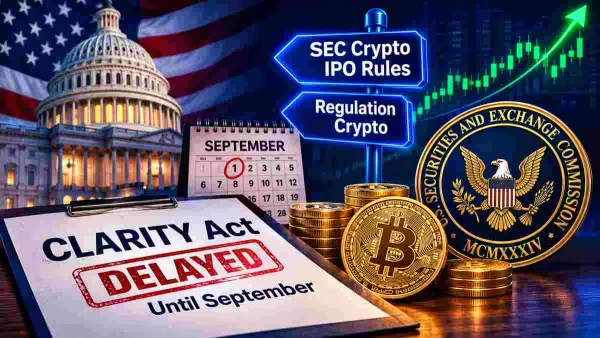
Without an agreement, consideration of the legislation may be delayed until the Senate returns from its five-week break.
For the cryptocurrency industry, the outcome could determine whether the United States moves closer to adopting comprehensive digital-asset market rules this summer or faces another extended period of regulatory uncertainty.