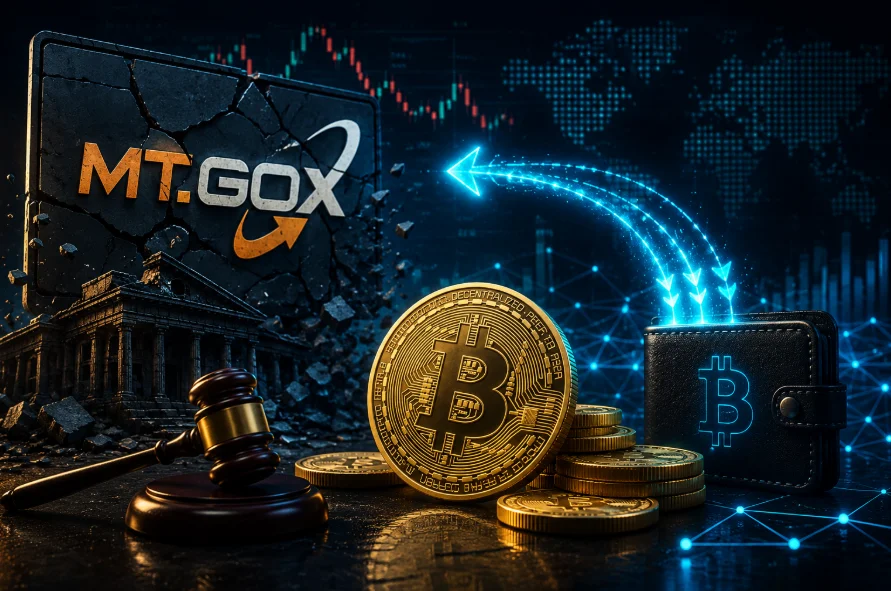
More than 12 years after its collapse, Mt. Gox remains one of the most talked-about names in cryptocurrency. Every time a wallet linked to the former exchange transfers Bitcoin, crypto markets and investors immediately take notice.
Although Mt. Gox stopped operating in 2014, its bankruptcy and repayment process is still ongoing. Understanding why these wallet movements matter requires looking back at one of the biggest events in Bitcoin's history and how it continues to affect today's market.
What Was Mt. Gox?
Mt. Gox was once the world's largest Bitcoin exchange. Based in Tokyo, Japan, it handled more than 70% of global Bitcoin trading volume during the early years of cryptocurrency.
Interestingly, the website was not originally built for Bitcoin. It was created by developer Jed McCaleb as an online marketplace for trading Magic: The Gathering cards. The name "Mt. Gox" stands for Magic: The Gathering Online Exchange.
In 2011, Mark Karpelès became the company's largest shareholder and CEO. Under his leadership, the platform quickly became the dominant Bitcoin exchange during the cryptocurrency's early growth.
What Caused the Mt. Gox Collapse?
The exchange's downfall was not caused by a single incident. Instead, it resulted from years of security weaknesses and repeated thefts that went unnoticed.
In February 2014, Mt. Gox suddenly suspended Bitcoin withdrawals after detecting unusual activity involving its wallets.
The company later announced that approximately 850,000 Bitcoin had been lost due to hacking attacks and technical problems. At the time, the stolen Bitcoin was worth hundreds of millions of dollars. Today, the same amount would be valued at tens of billions of dollars.
About 200,000 Bitcoin were later recovered, but the remaining losses forced Mt. Gox to file for bankruptcy in Japan.
The collapse shocked the cryptocurrency industry and damaged investor confidence during Bitcoin's early years.
Legal Cases Following the Collapse
The legal process continued for years after the exchange failed.
In 2019, Mark Karpelès was found guilty of falsifying financial records related to Mt. Gox's accounting. However, Japanese courts cleared him of the more serious embezzlement charges.
Meanwhile, investigations into the stolen Bitcoin continued internationally. In 2023, U.S. authorities charged two Russian nationals with laundering cryptocurrency connected to the Mt. Gox hack, highlighting how complex the investigation had become.
Why Did Repayments Take So Long?
One reason Mt. Gox continues to appear in the news is the unusually long repayment process.
After the exchange entered bankruptcy, many creditors opposed the original liquidation plan. As a result, the case was moved into Japan's civil rehabilitation process, which provides greater flexibility when returning assets to creditors.
A court-appointed Rehabilitation Trustee spent years determining how creditors should receive compensation. Depending on each claim, repayments could include:
- Cash
- Bitcoin (BTC)
- Bitcoin Cash (BCH)
- A combination of these assets
Although the rehabilitation plan received court approval in 2021, actual repayments did not begin until July 2024, roughly ten years after Mt. Gox collapsed.
Why Do Mt. Gox Wallet Transfers Make Headlines?
Whenever blockchain tracking services detect Bitcoin moving from a Mt. Gox wallet, many investors assume the coins are about to be sold.
However, that is usually not the case.
Most wallet transfers involve the Rehabilitation Trustee moving funds between controlled wallets or preparing distributions for creditors as part of the repayment process.
These transactions are publicly visible because Bitcoin operates on a transparent blockchain. Since the remaining holdings are worth billions of dollars, even a single transfer attracts attention across the cryptocurrency market.
Large transfers have occasionally coincided with short-term Bitcoin price volatility because traders worry that creditors could sell some of their newly received Bitcoin.
However, a wallet transfer alone does not confirm that Bitcoin has entered the market for sale.
Why This Matters for Bitcoin Investors
Mt. Gox-related activity remains important because it involves one of the largest pools of Bitcoin still held by a bankruptcy trustee.
Market participants monitor these wallets for several reasons:
- Large Bitcoin transfers can temporarily influence market sentiment.
- Repayment events may increase Bitcoin available to creditors.
- On-chain movements provide insight into the progress of the rehabilitation process.
- Traders often react quickly to news involving large Bitcoin holdings.
Similar attention has been given to asset distributions involving other bankrupt crypto companies, such as FTX, where large wallet movements also attracted market interest.
Current Repayment Status
The repayment process is still ongoing.
According to the Rehabilitation Trustee, the current deadline for major repayment categories—including Base Repayment, Early Lump-Sum Repayment, and Intermediate Repayment—is October 31, 2026.
However, this deadline has changed several times over the years. Previous target dates were extended from 2023 to 2024, then to 2025, and finally to 2026 as the trustee continued verifying creditor claims and preparing distributions.
Creditors are encouraged to monitor the trustee's official announcements because repayment schedules may change again if additional delays occur.
Security Warning for Creditors
The Rehabilitation Trustee has repeatedly warned creditors about phishing scams related to Mt. Gox repayments.
Fraudsters have created fake websites and emails pretending to represent either Mt. Gox or the trustee. Their goal is to steal login credentials, wallet information, or cryptocurrency.
Creditors should never:
- Connect their crypto wallet through links in unexpected emails.
- Share private keys or recovery phrases.
- Provide personal information on unofficial websites.
- Trust repayment messages that are not published through official trustee channels.
Remaining cautious is essential, as scammers continue targeting former Mt. Gox users.
Final Thoughts
More than a decade after its collapse, Mt. Gox continues to influence the cryptocurrency industry. While the exchange itself is long gone, its bankruptcy proceedings and ongoing creditor repayments still generate significant attention whenever Bitcoin moves from trustee-controlled wallets.
For investors, understanding the difference between routine repayment transfers and actual market selling is important. Although large wallet movements can create short-term volatility, they are primarily part of a long-running legal process rather than signs of a new security incident or sudden wave of Bitcoin sales.